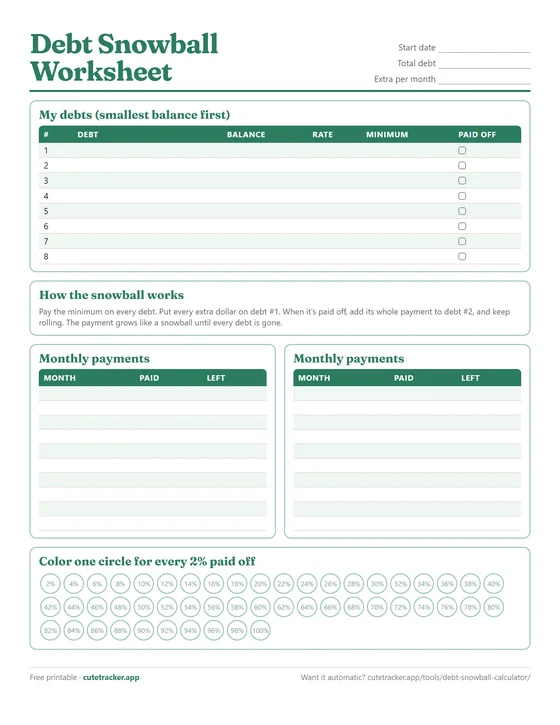
How the debt snowball works
The idea is simple: make the minimum payment on every debt, then throw everything extra at one target debt. With the snowball you target the smallest balance first. When it's gone, its payment rolls into the next debt, so your payment keeps growing even though your budget stays the same.
Snowball vs avalanche, in plain numbers
With the avalanche method you target the highest interest rate first instead. Mathematically it costs less in interest, sometimes a lot less on credit cards. But the snowball clears small debts quickly, and those early wins are why many people finish. This calculator runs both plans on your real numbers, so the choice is easy.
What the calculator assumes
Interest is added monthly from each debt's APR, every minimum is paid, and your extra payment plus any freed-up minimums go to the target debt. Rates and minimums stay the same. Actual payoff dates can differ because of fees, rate changes, interest timing and changing payments.
Make it visual
Seeing progress keeps you going. The free printable worksheet below has a debt list, a monthly payment log and a coloring chart: color one circle for every 2% you pay off.
Track it month by month
Our Debt Payoff Tracker spreadsheet works in Excel and Google Sheets: enter up to 12 debts, pick snowball or avalanche and get a 30-year month-by-month plan with your debt-free date and a coloring chart that fills in as you pay. One-time purchase, no subscription.
Method and limitations
The model applies monthly interest from the entered APR, fixed minimum payments and an extra payment to the selected target debt. Fees, new borrowing, rate changes and lender-specific interest calculations are not modelled.
Built and maintained by CuteTrackerApp. Report an issue through the shop.